This week Red and Green group celebrated everything African. We learnt some new words and greeted each other with a friendly ‘Jambo’ which means ‘Hello’.
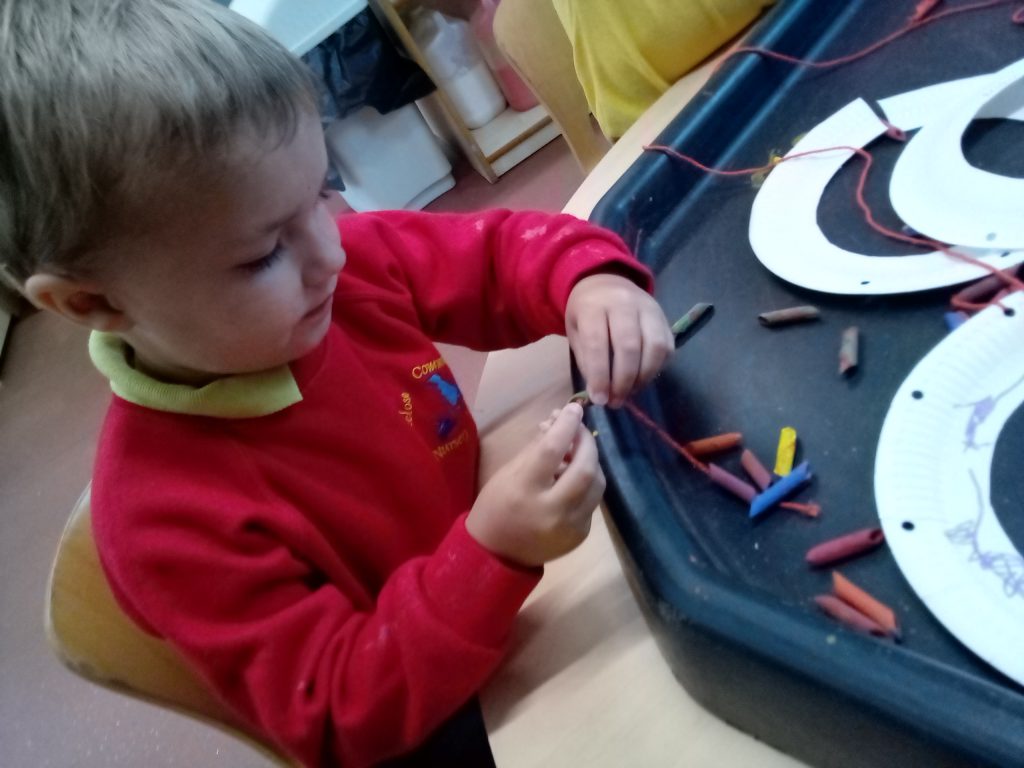
We looked at their different ways of life and the beautiful colours they wear. The children made African inspired necklaces making pattens on paper plates and threading pasta.
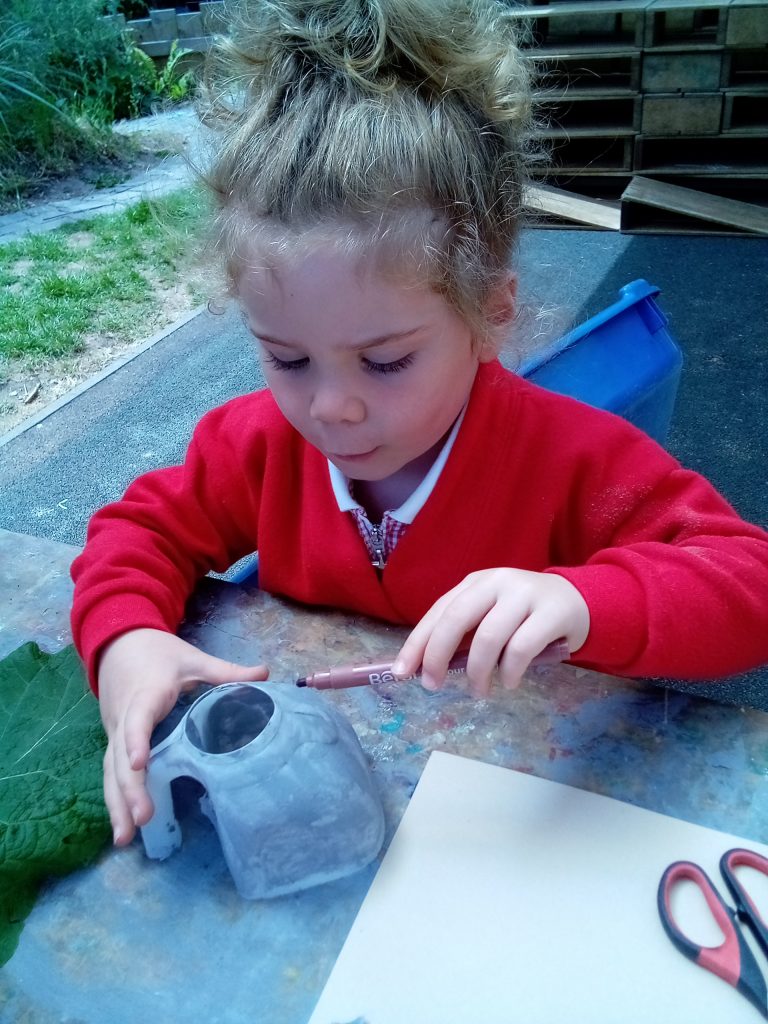
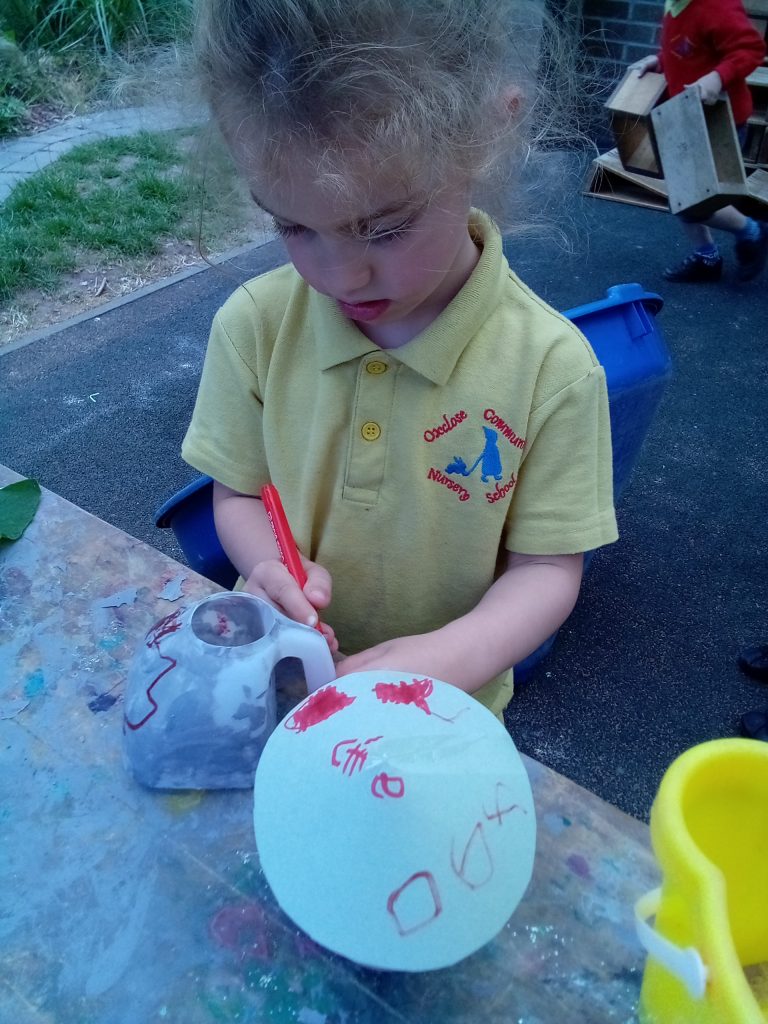
We made elephants out of milkbottles and used 3D shapes (cylinders and cones) to make mud huts for our small world play.
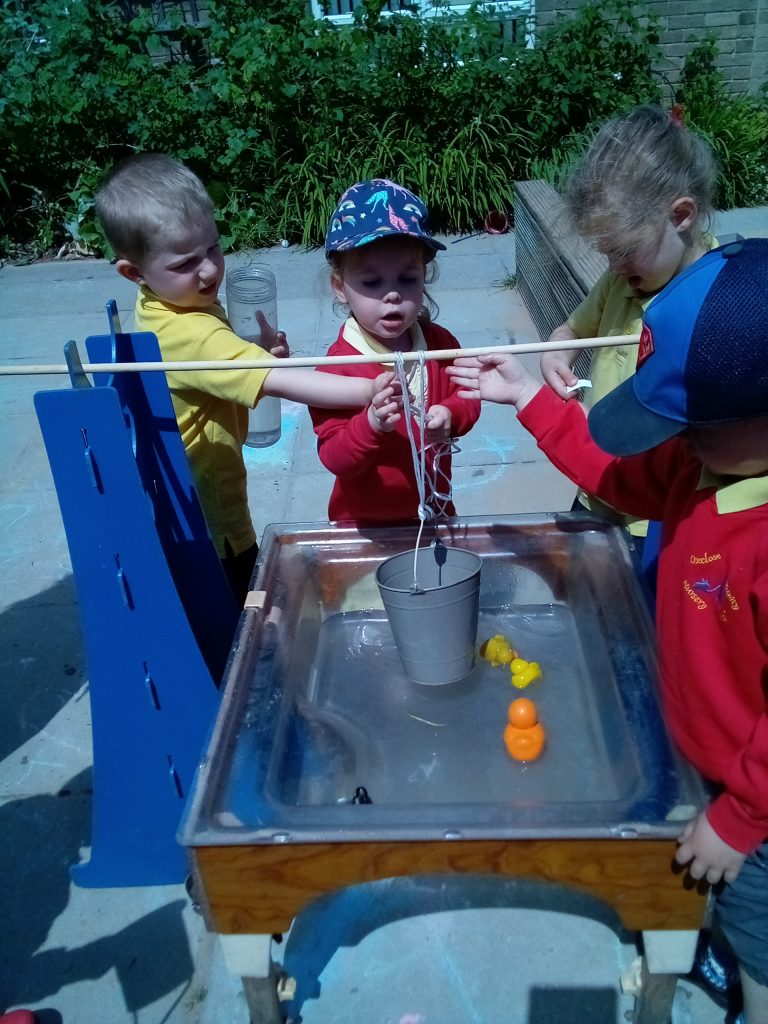
Red group used the computer to learn about African villages and were fascinated that they did not have taps to get water from. We made a ‘well’ outside and the children used a bucket and some rope to collect water and transfer it into another container to carry to their own village they had made comprising off dens made from boxes and sticks and material.
We harvested some vegetables from our nursery allotment and made lovely fruit kebabs and salads and practiced our cutting and colouring skills making tribal masks.
The children really enjoyed watching the Tinga tinga tales on YouTube, they are based on African folk stories, their favorite was ‘How elephant got his trunk’. They also enjoyed the story ‘Handas Surprise’ we copied Handa by trying to balance things on our head and used our observational skills to draw her basket of fruit.
Lastly we dressed up in bright or animal print clothes and all joining in a very physical dance.
EYFS Links
R14- Listens to stories with increasing attention to detail.
R16- Shows interest in illustrations and print in books.
SM20- Beginning to use mathematical names for solid 3D shapes.
PC10- Shows an interest different ways of life.
TW17- Can talk about some of the things they have observed.
TW18- Talks about why things happen and how things work.
TW21- Looks closely at similarities, differences, pattens and change.
T8- Knows that information can be retrieved from computers.
EMM10- Enjoys joining in with dancing.
EMM12- Beginning to move rhythmically.
EMM13- Imitates movement in response to music.
EMM21- Joins construction pieces together to build and balance.
EMM30- Uses simple tools and techniques competently and appropriately.
BI13- Uses available resources to create props to support role play.
BI19- Plays alongside other children who are engaged in the same theme.
MR21- Keeps play going by responding to what others are saying or doing.
S26- Questions why things happen and gives explanations.
S30- Builds up vocabulary that reflects the breadth of their experiences.
HSC24- Observes the affects of activity on their body.
HSC29- Eats a healthy range of foodstuffs and understands need for variety in food.
Characteristics of Effective Learning
Engagement
*Showing curiosity about objects, events and people
*Using senses to explore the world around them
*Acting out experiences with other children
*Seeking challenge
*Showing a can do attitude
Motivation
*Maintaining focus on their activity
*Showing high levels of fascination and energy
*Showing satisfaction in meeting their own goals.
*Being proud of how they accomplished something.
Thinking
*Finding new ways to do things
*Testing their ideas
*Developing ideas of grouping, sequencing, cause and effect.
*Planning, making decisions about how to approach a task, solve a problem and reach a goal